
Academic Staff
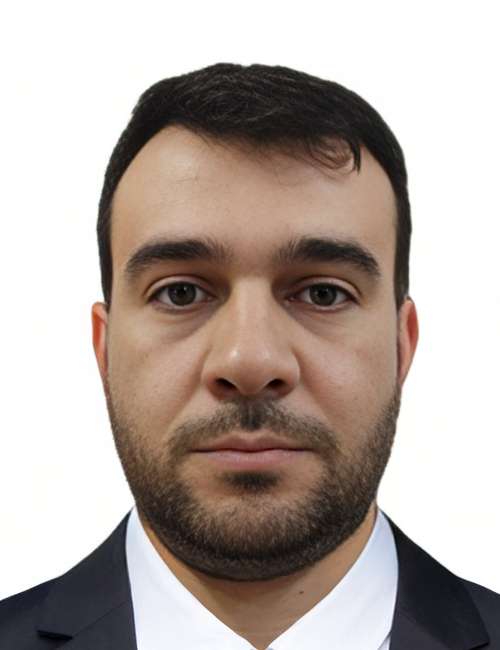
Architectural Engineering
College of Engineering
University of Duhok
- Ph.D., Architecture (Sustainable Design and Environment), Eastern Mediterranean University, Famagusta, North Cyprus, 2019–2025.
- M.Sc., Architecture (Energy Conservation), Eastern Mediterranean University, Famagusta, North Cyprus, 2012–2014.
- B.Sc., Architecture, University of Duhok, Duhok, Iraq, 2005–2009.
Diler Haji Morad Aldoski is an Assistant Lecturer in Architecture and an architect with expertise in sustainable and physical environmental design. He received his PhD in Sustainable Design and Environment from Eastern Mediterranean University, Cyprus. His research addresses building energy performance with a particular focus on residential and office buildings in hot and semi-arid climates, emphasizing the role of occupant behaviour, sociocultural requirements, and climate-responsive architectural strategies.
His scholarly work investigates the environmental performance of traditional and contemporary housing typologies in the Kurdistan Region of Iraq, aiming to develop context-sensitive and energy-efficient residential models. He has published in peer-reviewed international journals and conference proceedings and has contributed to academic committees, accreditation activities, and professional consultancy. His research interests include sustainable architecture, building energy simulation, vernacular architecture, renewable energy integration, and environmentally responsive design.
Dr. Diler Haji Morad Aldoski has extensive experience in teaching architecture and architectural engineering courses at undergraduate level. His teaching emphasizes sustainable design, environmental performance, and the integration of sociocultural factors into architectural practice. He adopts a student-centered approach, combining theoretical knowledge with practical applications, including design studios, workshops, and building simulations. His philosophy is to equip students with both technical skills and a deep understanding of context-sensitive, sustainable architectural solutions.
Selected Courses Taught:
- Architectural Design (2nd–5th stage),
- Architecture and Sustainability,
- Process of Urban Designs,
- Architectural Construction and Materials I & II,
- Building Construction -Indoor Environmental Quality,
- Architectural Safety and Risk Management
- Working Drawings,
- Perspective and Shadow,
- 3D Modeling (Revit, AutoCAD)