Academic Staff

June 1, 2026, 3:56 p.m.
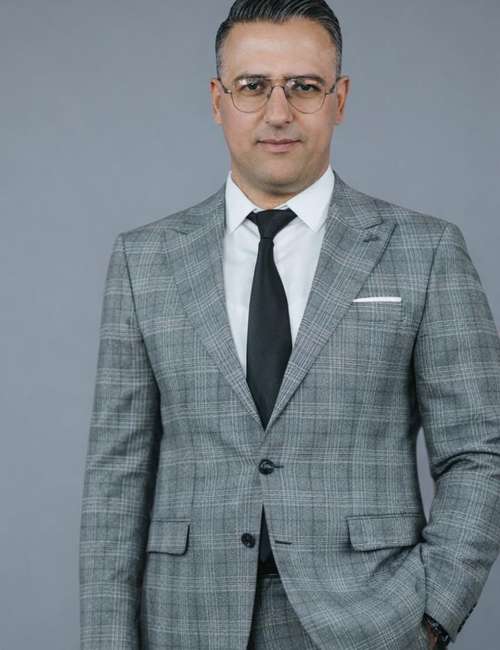
Shivan Shlaymoon Toma (PhD) Head of Department
None
Assistant Professor in Linguistics

Sureth Language and Literature
College of Basic Education
University of Duhok

  • PhD in Linguistics, School of Languages, Cultures and Societies, University of Leeds, UK (2015).
  • MA in English, College of Arts, University of Duhok, (2010).
  • BA in English, College of Arts, University of Duhok, (2004).

An academic career spanning more than two decades at the University of Duhok highlights a profound commitment to linguistic scholarship, institutional growth, and pedagogical innovation. From early foundational roles to high-level departmental administration, this trajectory reflects a deep engagement with both the structural complexities of language and the practical demands of advanced professional training. The cornerstone of this teaching practice was laid during an initial period serving as an Assistant Researcher and Researcher within the English Department. In this dual capacity, vital departmental administrative responsibilities were balanced alongside interdisciplinary English instruction across diverse university colleges. Far from being a localized assignment, delivering language instruction to varied academic departments outside the core English faculty cultivated a distinct pedagogical adaptability, requiring complex linguistic concepts to be tailored to students of diverse academic backgrounds. This early immersion in cross-disciplinary environments established a versatile teaching philosophy that seamlessly carried over into upper-level undergraduate instruction. At the undergraduate level, focus centers on equipping third- and fourth-year students with highly specialized, market-ready professional competencies, bridging theoretical linguistic frameworks with practical application through core disciplines such as Simultaneous Interpreting, Contrastive Grammar, Advanced Translation and Composition, and Grammar and Writing. By focusing on these rigorous tracks, undergraduate instruction functions as a professional pipeline, preparing students to navigate complex multilingual landscapes with technical precision. Beyond undergraduate training, a significant portion of this academic leadership is dedicated to steering the next generation of researchers and scholars. At the postgraduate level, advanced training is delivered directly to MA candidates and doctoral researchers across multiple university colleges. Instructing at this level involves leading seminars in Linguistics and Academic English Language, where the objective extends past the transmission of advanced subject matter to actively cultivating rigorous research methodologies, critical analytical thinking, and sophisticated academic discourse. This commitment to highest-level doctoral scholarship is further exemplified by his specialized instruction at the PhD level, where he delivers comprehensive lectures on Advanced Syntax to doctoral candidates at the University of Zakho's College of Humanities (Department of English), and drives institutional development by designing and teaching foundational curriculum frameworks tailored specifically for PhD candidates at the University of Duhok's College of Basic Education (Department of English). Through this multifaceted approach, his teaching practice plays a vital role in elevating the academic standard of linguistic research within the institution and across the broader region.

My administrative, advocacy, and field leadership activities reflect sustained leadership in both academic governance and community development, spanning institutional administration, applied fieldwork, professional interpreting, and international scholarly engagement.

Academic Leadership and Curriculum Design

After serving as Director of the Centre of Languages, I assumed my current position as Head of the Sureth (Syriac) Language and Literature Department. In this capacity, I have played a central role in curriculum development, leading institutional initiatives to secure formal accreditation for the teaching of minority Intangible Cultural Heritage at the University of Duhok — an important step toward the recognition and preservation of endangered linguistic and cultural traditions within higher education.

Field Coordination and Capacity Building

As regional coordinator for the Intangible Cultural Heritage Gathering Project, conducted in partnership with the Institute of Development Studies at the University of Sussex, I designed and delivered training programmes for dozens of young Assyrian and Chaldean heritage practitioners. This capacity-building initiative focused on the development of a sustainable digital archive, equipping emerging community researchers with the methodological tools necessary for long-term heritage documentation and transmission.

High-Level Simultaneous Interpreting

I have provided professional simultaneous interpreting services for a range of international and national organizations, including GIZ, TearFund, SIL, and the Assyrian Aid Society. My interpreting engagements have also extended to high-profile ceremonial contexts, notably including the interpretation of addresses delivered by President Nechirvan Barzani at official university commencement ceremonies.

International Panels and Public Advocacy

I regularly represent the University of Duhok at international academic forums and policy platforms. My contributions include a presentation on heritage-driven economic development delivered in Beirut, participation in scholarly panels at the European Academy of Religion in Palermo, and engagement in national-level policy dialogue at the Kurdistan National Breakfast Prayer alongside senior figures in regional governance.

Research

  1. Kareem, D. K., & Toma, S. (2026). Student engagement and teacher practices using Cutting Edge Elementary at the University of Duhok. Wasit Journal for Humanities [مجلة واسط للعلوم الانسانية], 22(2), 1249–1268.
  2. Obaid, A. R., & Toma, S. S. (2026). Inferential discourse markers across English and Behdini Kurdish legal and scientific speeches in simultaneous interpreting: IDMs in English-Kurdish SI. Zanco Journal of Human Sciences, 30(SpB), 704–720.
  3. Toma, S. S. (2026). The impact of L1 transfer on the acquisition of wh-movement constraints in English syntactic islands: Evidence from Behdini-Kurdish learners. Zanco Journal of Human Sciences, 30(1), 199–213.
  4. Zaya, A., & Toma, S. (2026). Exploring Kurdish EFL teachers’ perspectives on teaching relative clauses through task-based language teaching. Humanities Journal of University of Zakho, 14(1), 40–52.
  5. Shahab, S., & Toma, S. S. (2025). Sovereignty, identity and Assyrian. In Border straddling heritages: Containment, contestation, and appreciation of shared pasts (Vol. 10, p. 133). Berghahn Books.
  6. Tadros, M., Toma, S. S., Almofti, J. M. M. M., Khuder, W. S., Majdal, S. A. S., Abdulkhaliq, Z. S., & Howman, C. (2025). The handbook of Iraqi people’s heritage. Institute of Development Studies.
  7. Tadros, M., Toma, S. S., Almofti, J. M. M. M., Khuder, W. S., Majdal, S. A. S., Abdulkhaliq, Z. S., & Howman, C. (2025). The handbook of Iraqi people’s heritage (p. 265). Institute of Development Studies.
  8. Toma, S. S. (2025). Assyrian heritage. In The handbook of Iraqi people’s heritage (p. 59). Institute of Development Studies.
  9. Toma, S. S. (2025). Chaldean heritage. In The handbook of Iraqi people’s heritage (p. 95). Institute of Development Studies.
  10. Saddiq, M. T., & Toma, S. S. (2024). Assessing university students’ competence in translating English discourse connectives into Kurdish. Academic Journal of Nawroz University, 13(1), 608–624.
  11. Sherzad, R., & Toma, S. S. (2024). Investigating passive voice problems in Kurdish students’ translation from and into English. Academic Journal of Nawroz University, 13(1), 562–580.
  12. Toma, S. S. (2024). Generative approaches to Behdini-Kurdish students' acquisition of English passivization. Humanities Journal of University of Zakho, 12(4), 876–881.
  13. Toma, S. S. (2024). Navigating linguistic structures: The journey of Arab learners towards mastering English syntactic gaps. Journal of Language Studies, 8(6), 147–167.
  14. Ahmed, A. K., & Toma, S. S. (2023). Teaching and learning simultaneous interpreting at Kurdistan region universities: Challenges and strategies. Academic Journal of Nawroz University (AJNU), 12(4), 415–422.
  15. Hasso, Y., & Toma, S. (2023). A contrastive analysis of modality between English and Behdini-Kurdish. Humanities Journal of University of Zakho, 11(1), 86–93.
  16. Saddiq, M. T., & Toma, S. S. (2023). Hedging devices in English and Behdini-Kurdish: A contrastive study. Journal of Duhok University, 26(2), 20–32.
  17. Tadros, M., Shahab, S., & Qulliam-Graham, A. (2022). Violence and discrimination against women of religious minority backgrounds in Iraq. Coalition for Religious Equality and Inclusive Development, Institute of Development Studies.
  18. Toma, S. S. (2022). A study of food and drink metaphors in Iraqi Syriac (CREID Working Paper 13). Coalition for Religious Equality and Inclusive Development, Institute of Development Studies.
  19. Toma, S. S. (2022, December 31). Identity, nationality, religion and gender: The different experiences of Assyrian women and men in Duhok, Iraq. The Institute of Development Studies and Partner Organisations.
  20. Toma, S., & Zaya, A. O. (2022). Violence and discrimination against the Assyrian people in the Kurdistan Region of Iraq. In Violence and discrimination against women of religious minority backgrounds in Iraq (p. 312). Institute of Development Studies.
  21. Toma, S. (2020). From wh-movement to wh-in-situ acquisition of I-to-C movement in English interrogative constructions by Kurdish learners. Humanities Journal of University of Zakho, 8(1), 159–171.
  22. Toma, S. S., & Simo, H. I. A. (2020). Modality in English and Kurdish: A contrastive study. Journal of Duhok University, 23(1), 63–70.
  23. Toma, S. (2019). Acquisition of English tense and aspect translation competence by Behdini students: An experimental study. Advances in Language and Literary Studies, 10(2), 71–84.
  24. Toma, S. S., & Hussein, K. J. (2019). Acquisition of definiteness and indefiniteness by Behdini Kurdish learners of English. Journal of Duhok University, 22(2), 378–392.
  25. Toma, S. (2018). Object and subject case marking in Behdini. European Scientific Journal, 14(5), 205–215.
  26. Toma, S. S. (2016). From intrusive to resumptive: The acquisition of wh-dependencies by Behdini learners of English [Master's thesis, University of Leeds].
  27. Toma, S. (2010). Syriac metaphor in the New Testament and its interpretation into English, Kurdish, and Arabic [Master's thesis, University of Duhok].

My research spans structural linguistics, cognitive language acquisition, translation studies, and cultural preservation. In formal syntax and language acquisition, I focus on generative approaches to language processing, including the acquisition of wh-dependencies, syntactic gaps, passivization, and L1 syntactic transfer among Kurdish and Arab learners. In contrastive linguistics and semantics, I examine grammatical and semantic features such as modality, tense, aspect, Differential Object Marking, and hedging devices through comparative analyses of English and Behdini-Kurdish.

My research also extends to translation studies and simultaneous interpreting, where I investigate the structural and cognitive challenges faced by university students in translating discourse connectives, non-canonical sentence structures, and taboo expressions. Another area of focus is minority rights and intangible cultural heritage, particularly the documentation and preservation of Syriac/Aramaic cultural and cognitive metaphors, alongside the study of structural violence and discrimination affecting minority communities.

Academic supervision is central to the development of scholarly communities, and nowhere is this more evident than in the sustained mentorship offered across doctoral, postgraduate, and undergraduate levels at the University of Duhok. Spanning the fields of linguistics, translation studies, language acquisition, and curriculum design, this supervisory practice reflects a coherent intellectual commitment to guiding students through rigorous empirical and theoretical inquiry.

At the doctoral level, supervision engages with some of the most pressing questions in applied linguistics and translation studies, including translation competence, task-based language teaching, pragmatic dimensions of language learning, and the rendering of non-canonical structures across typologically distinct languages. These research directions demand not only disciplinary expertise but also the capacity to support candidates in navigating complex methodological and theoretical terrain — a capacity developed through years of active engagement with the same questions in independent research.

At the MA level, supervised theses address a range of focused topics — from definiteness and modality acquisition to simultaneous interpreting strategies and the translation of taboo expressions between English and Behdini-Kurdish — demonstrating both thematic breadth and linguistic specificity. The consistent presence of Behdini-Kurdish as a research variable across multiple supervised studies reflects a deliberate investment in the documentation and analysis of an underrepresented linguistic variety.

Beyond formal dissertation supervision, the annual mentorship of undergraduate capstone and translation research projects ensures that scholarly development begins early, fostering a research culture that extends across all stages of academic formation. Taken together, this supervisory record represents more than administrative oversight; it constitutes a meaningful contribution to the intellectual growth of the next generation of linguists and translation scholars.