Academic Staff
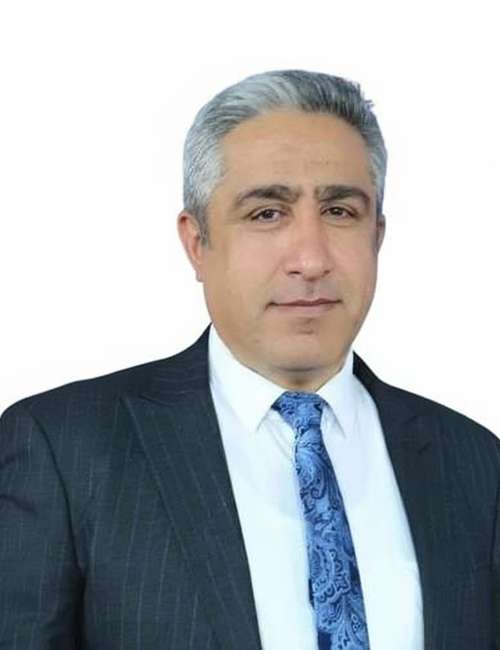
Professor in Linguistic
Kurdish Language
College of Basic Education
University of Duhok
- PhD in Pragmatics, College of Arts, University of Soran, 2012.
- MA in Semantics & Pragmatics, College of Arts, University of Duhok, 2008.
- BA, Kurdish Language and Literature, College of Arts, University of Duhok, 2004.
- BA, English Language, College of Education, University of Duhok, 2024.
University teaching in the fields of language and linguistics is a rich academic experience that contributes to building knowledge and developing students' research skills. Through an academic journey spanning from 2006 to the present at the University of Duhok, the University of Zakho, Nawroz University, and Cihan University, I have offered numerous courses at the undergraduate, master's, and doctoral levels, reflecting a comprehensive approach to knowledge and methodology in the field of linguistic studies.
At the undergraduate level, my experience has encompassed teaching diverse specializations within the fields of Kurdish and English language studies, including grammar, phonetics, phonology, morphology, syntax, lexicology, general linguistics, and semantics. These courses have aimed to provide students with a solid scientific foundation for understanding and analyzing language structure, while also developing their critical and applied thinking skills.
At the master's level, instruction focused on deepening theoretical and applied understanding in the fields of linguistics, semantics, and pragmatics, in addition to phonetics and phonology. Modern methodologies based on comparative analysis and applied studies were adopted, enabling students to engage in scientific research and acquire advanced analytical tools.
At the doctoral level, discourse analysis, a leading field in linguistic studies, was taught. This course empowers students to analyze texts and discourses within their social and cultural contexts. The focus of this stage was on developing independent research capabilities, enhancing critical thinking skills, and connecting linguistic theories to real-world applications.
This teaching experience demonstrates a clear methodological progression from foundational to specialized, employing modern teaching approaches that keep pace with developments in the field of linguistics. It also reflects an academic commitment to graduating qualified professionals capable of contributing to the advancement of linguistic research and serving the academic community.
Academic activity outside of teaching is a cornerstone of developing one's scholarly career and enhancing one's intellectual presence within the academic community. This experience exemplifies a comprehensive model that combines scholarly writing, conference participation, seminar organization, and media engagement, reflecting the researcher's dynamism and active involvement in language and linguistics issues.
In the field of authorship, twenty books have been published in the field of linguistics, a clear indicator of continued research and scholarly output. These publications address diverse topics in linguistics, enriching the academic library, particularly in studies related to the Kurdish language and neighboring languages, and reflecting a focus on theoretical grounding and practical application.
Regarding scientific conferences, participation has included attendance at several prominent events, including a conference in Diyarbakir in 2017, as well as two conferences in 2019, one at Nawroz University and the other at Duhok University. These participations serve as a platform for exchanging expertise, presenting research findings, and discussing them within specialized academic frameworks. As part of its efforts to disseminate knowledge and broaden its impact, the researcher presented approximately fifty seminars in various venues and institutions, reflecting a commitment to sharing knowledge with diverse audiences, both within and outside academia. These activities also contribute to enhancing scientific communication skills and simplifying complex linguistic concepts.
Furthermore, the researcher's media presence was notable through fifteen television appearances, demonstrating its role in connecting academic knowledge with the community and contributing to the dissemination of linguistic and cultural awareness through the media.
Overall, these academic activities reveal a rich and balanced experience that combines scholarly production, academic engagement, and community impact, thereby strengthening the researcher's standing in the field and supporting the advancement of linguistic studies in the region.