
Academic Staff

May 27, 2026, 11:23 p.m.
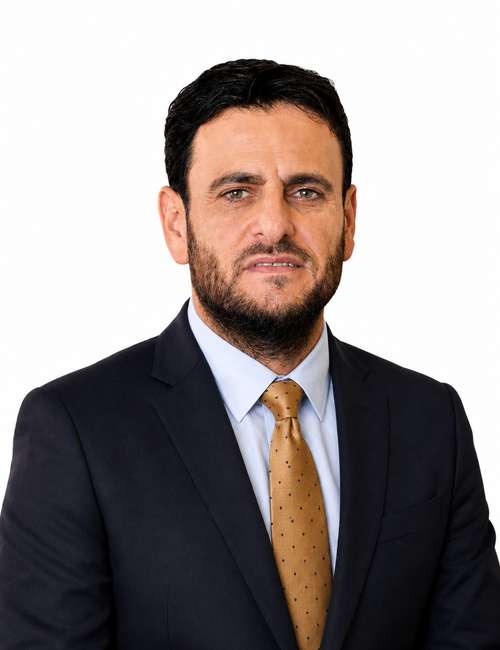
Sipan S. Mahmada (PhD)
None
Assistant Professor in History of Modern Western Thought

History
College of Basic Education
University of Duhok

  • PhD in Early Modern History of Europe, Faculty of Humanities, University of Zakho, 2024.
  • MA in Early Modern History of Europe, Faculty of Arts, University of Leicester, UK, 2015.
  • BA College of Basic Education, University of Duhok, 2009.

I began my academic teaching career in 2015 at the College of Basic Education at the University of Duhok, specializing in the history of modern Western thought. This experience served as a significant scholarly and educational milestone that contributed to developing my academic expertise and enhancing my skills in conveying knowledge and fostering critical and analytical thinking among students, as well as linking theoretical aspects to research applications in historical studies. I began my academic teaching career in 2015 at the College of Basic Education at the University of Duhok, specializing in the history of modern Western thought. This experience served as a significant scholarly and educational milestone that contributed to developing my academic expertise and enhancing my skills in conveying knowledge and fostering critical and analytical thinking among students, as well as linking theoretical aspects to research applications in historical studies.

My teaching experience included several specialized and diverse courses. I taught "The Renaissance and Reformation Eras," which covered the intellectual, religious, and political transformations in Europe and their impact on shaping the modern world. I also taught "Modern and Contemporary European History," focusing on political, economic, and social developments in Europe and analyzing the factors influencing historical events and their outcomes.

In the field of scientific research, I contributed to teaching "Historical Research Methodology," where the focus was on training students in academic research methods and how to utilize and analyze historical sources according to modern scientific approaches. I also taught "Philosophy of History," which addressed intellectual and philosophical trends in interpreting the movement of history and understanding the development of human societies throughout the ages. Additionally, I taught "Historical Texts in English" to develop students' ability to read and analyze foreign historical texts and benefit from international references in their academic research.

Throughout my teaching experience, I have been keen to adopt modern educational methods based on dialogue, discussion, and critical analysis, encouraging students to interact and participate actively within the educational environment. This contributes to building an academic personality capable of independent thinking and rigorous scientific research.

This experience has solidified my conviction that university education is a scholarly and educational mission that contributes to building cognitive and critical awareness and preparing a generation capable of understanding and analyzing historical transformations with objectivity and scientific methodology. This journey has also contributed to developing my skills in academic communication, managing the educational process, and employing modern curricula to serve the quality and scientific goals of university education.

Research

  1. Mahmada, S. S. (2024). Heretical traditions in the early English Reformation 1534–1553. Adab Al-Rafidayn, 54(99), 306–318.
  2. Mahmada, S. S. (2024). Religious persecution and practical toleration in England (1500–1640): The social context of tolerance between neighbors (principle and practice). Zanco Journal of Human Sciences, 28(4), 57–76.
  3. Mahmada, S. S. S. (2023). الاضطهاد الديني في فترة عودة الملكية إلى إنكلترا 1660-1688 [Religious persecution in the period of the restoration of the monarchy in England 1660–1688]. Journal of Duhok University, 26(1), 1212–1226.
  4. Mahmada, S. S., & Al-Jawadi, G. (2023). البيوريتانيون والنضال من أجل التسامح خلال الحرب الأهلية الإنكليزية 1640-1649 [The Puritans and the struggle for tolerance during the English Civil War 1640–1649]. Adab Al-Rafidayn, 53(95), 98–116.
  5. Mahmada, S. S. (2020). قراءة للسياقات التاريخية للحرب الأمريكية-الإسبانية في عام 1898 [A reading of the historical contexts of the American-Spanish War in 1898]. Humanities Journal of University of Zakho, 8(1), 96–111.
  6. Mohammedameen, S. S., & Mahmada, S. S. (2019). English civil wars 1642–1649: A study of its origins, events and the most important consequences. Journal of Duhok University, 21(2), 633–647.
  7. Muhamada, S. S., & MohammedAmeen, S. S. (2019). The United States of America war of 1898 against Spain empire. Journal of Duhok University, 21(2), 584–601.

My research interests center on the intellectual and cultural history of early modern Europe, with a particular focus on the complex intersections between the Renaissance and the Reformation, and the profound transformations that reshaped patterns of thought, knowledge, and power in Western Europe from the 15th century through the early Enlightenment.

My approach is rooted in a post-revisionist perspective, through which I seek to move beyond Whig interpretations on one hand and reductive revisionist tendencies on the other, by tracing the deep structures of idea formation and their genealogical shifts over time.

I am also interested in studying the relationship between religious, philosophical, and political thought, and how concepts of the self, reason, freedom, power, and knowledge were formed within the contexts of theological conflict and European cultural transformation. I pay special attention to the historical structure of concepts and the interaction between epistemic shifts and religious and cultural changes in the formation of European modernity.

My experience in academic supervision at the College of Basic Education, University of Duhok, which has spanned since 2015 within my specialization in the history of modern Western thought, is based on a scientific approach that combines methodological rigor with intellectual openness. It contributes to building the researcher's character, refining their critical tools, and deepening their awareness of the historical and cultural contexts of texts and ideas.
In my supervisory work, I have proceeded from the conviction that true academic research is not limited to gathering information or reproducing ready-made knowledge; rather, it consists of constructing a scientific problem capable of questioning texts and historical facts from a critical and analytical perspective. Therefore, I have been keen to guide the college's students toward formulating precise research questions, distinguishing between description and analysis, and reading sources critically in a way that transcends prejudices and reductionist interpretations.
My supervisory interests have centered on themes of the Renaissance and the Reformation, philosophical and intellectual shifts in Western Europe, the relationship between religion, knowledge, and power, as well as comparative studies in the history of ideas. I have also placed special importance on developing research independence among students by training them to build hypotheses, achieve methodological discipline, and enhance scientific accuracy in analysis and conclusion. This includes linking textual study to broader cultural and social structures, based on the premise that ideas cannot be understood in isolation from the historical and epistemological conditions of their production.
This experience has contributed to solidifying my conviction that academic supervision is not merely research oversight, but rather a cognitive and educational practice that seeks to form a researcher capable of producing solid critical knowledge connected to the questions of thought, history, and cultural transformations in human societies.